How to Prepare for an Interview From the Job Description (With 5 Role Examples)
A practical way to turn any job posting into likely discussion themes, stronger examples from your experience, and a focused practice session.
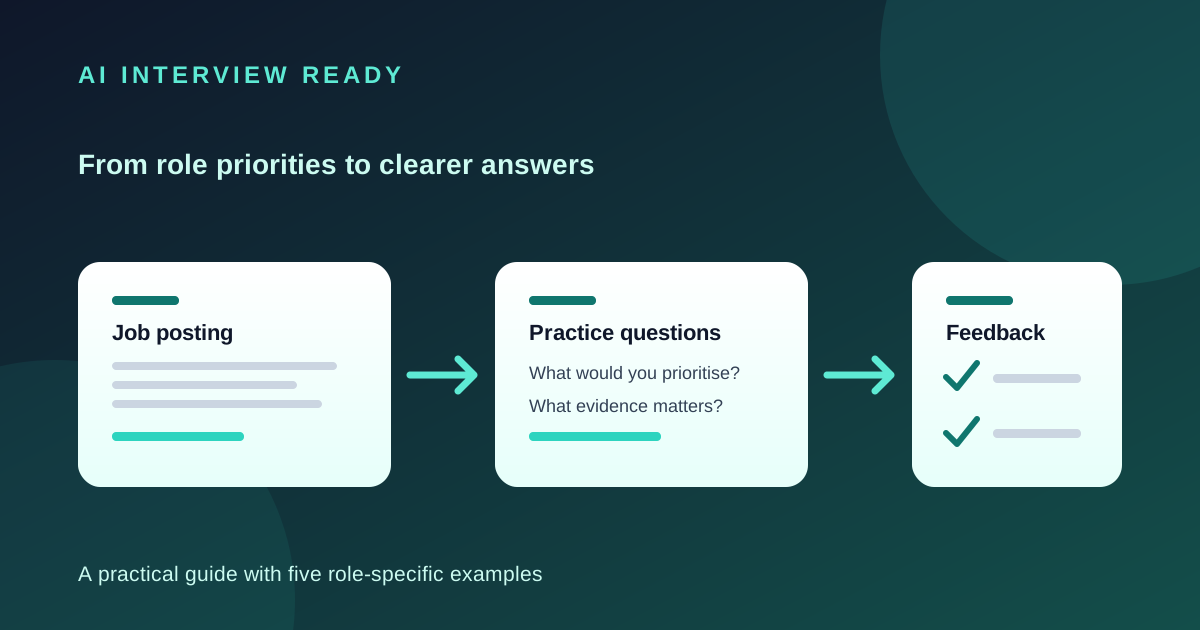
AI Interview Ready
A job description is more than a list of requirements. It is your best public clue about the problems the team wants someone to solve. It cannot tell you the exact questions an interviewer will ask, but it can help you choose which parts of your experience to prepare—and which generic questions to stop memorising.
This guide shows a repeatable method you can use for one interview or for several applications at once. The examples are illustrative, not descriptions of any real employer's interview process. You will need the job posting, your CV, and a place to make notes.
Step 1: Find the job behind the title
Read the posting once for the overall role. On the second pass, mark three kinds of information:
- Outcomes: What should be different after this person has done the job well? Look for verbs such as improve, launch, retain, reduce, or scale.
- Decisions: What will the person need to choose, prioritise, or negotiate? These often become case or situational questions.
- Constraints: What makes the work hard—limited budget, regulation, cross-functional dependencies, a demanding customer segment, or a growing operation?
Do not treat every bullet as equally important. Repeated themes and the first few responsibilities are usually better preparation cues than an isolated tool in a long “nice to have” list. When a posting is vague, make a note to ask the interviewer what success in the role would look like.
Example: read past the tool list
Suppose a marketing posting mentions paid media, analytics software, and “improving qualified pipeline without increasing acquisition cost.” The tools matter, but the underlying problem is a trade-off between lead volume, lead quality, and spend. A useful preparation question is: “A campaign drives clicks but few qualified leads. What would you investigate before changing budget?” That is more revealing than trying to recite every platform you have used.
Have a job description in front of you?
Use it with your CV to practise questions grounded in this role.
Step 2: Match each priority to evidence from your CV
For each of the top three priorities, make a short evidence note. Use four lines: the situation, what you personally did, the result you observed, and one limitation or trade-off. If you lack a matching result, do not invent one. Use a closely related decision and explain what would be different in this role.
For example, “I managed a product roadmap” is broad. “I delayed a requested feature after interviews showed a more urgent onboarding problem; the team tested a smaller fix first and monitored activation” gives an interviewer something concrete to examine. If you cannot quantify the outcome, describe what changed and what evidence you had. Accuracy beats an impressive but unsupported percentage.
This evidence note also helps your application. Put the most relevant truthful examples near the top of the tailored resume. A cover letter can connect one of those examples to the employer's stated challenge. If you are applying for multiple roles, keep the original CV intact and tailor a version for each posting rather than rewriting your history.
Step 3: Turn responsibilities into questions
Convert each outcome or decision into a question that begins “How would you…?” or “Tell me about a time…”. Prepare both: a hypothetical case reveals your method; a past example shows your actual experience. Here are five role-specific starting points:
- Product manager: A posting calls for roadmap prioritisation. Practise: “Two teams want the same engineering capacity. How would you decide?” Show user impact, evidence, trade-offs, and a success measure.
- Marketing manager: A posting stresses qualified pipeline. Practise: “Clicks are up, but qualified leads are flat. What do you inspect?” Separate campaign, landing-page, and lead-quality hypotheses.
- Business analyst: A posting calls for cross-functional requirements. Practise: “Sales wants fewer onboarding steps; compliance wants more checks. How do you resolve it?” Clarify decision rights, constraints, and acceptance criteria.
- Customer success manager: A posting emphasises enterprise renewals. Practise: “Usage is falling and the customer champion has left. What do you do?” Start with account health and stakeholder discovery, not an automatic upsell.
- Operations manager: A posting asks for better on-time delivery. Practise: “Service levels fall as volume rises. Where do you look first?” Define the metric, locate the bottleneck, and protect quality while testing a fix.
These are practice questions, not predictions. Your aim is to build flexible reasoning and useful stories. If the interviewer asks a different question, you can still draw on the same evidence.
When a role includes a technical screen, list the skills it actually tests and practise explaining your reasoning as well as the final answer. Our technical skills assessment guide shows how to turn feedback into a focused practice plan. For behavioral questions, use the question-pattern guide to select examples that answer the underlying competency.
Step 4: Practise the answer, not just the outline
Choose one case and one past-experience question. Answer aloud without reading a script. Then review your answer against five checks:
- Did I answer the question before introducing extra background?
- Did I make my assumptions explicit?
- Did I distinguish what I did from what the team did?
- Did I explain a trade-off, not just the ideal outcome?
- Did I say how I would know whether the action worked?
If your answer fails a check, revise that part and try again. Keep the example truthful and specific to the role, but do not memorise a script word for word; leave room to answer the question actually asked. A purpose-built practice session can hold your CV and the job description alongside your answers, so you are not rebuilding the context every time. AI Interview Ready's free start includes three practice questions without a card; available application tools and usage vary by plan.
If the interview will be remote, also practise with the camera, microphone, and notes you intend to use. The virtual interview guide covers the format-specific preparation.
Turn the posting into practice
Add your CV and target role, answer three relevant questions, and get feedback. No credit card required.
Start free practice →Step 5: Keep the role connected to the rest of your search
Preparation is easier when you can find the same posting, tailored application, and interview notes again. Save the job, record the application stage, and keep a short note about what you learned from each conversation. If you later apply for a similar role, reuse the underlying evidence—not the exact same answer or cover letter.
That is where AIR's broader workflow matters. You can browse openings, track applications, tailor a resume, create cover letters, and practise interviews in one product. It does not automatically apply on your behalf or know why a particular recruiter declined you. The value is staying organised and improving the parts you can control. If you are deciding between manual tracking and automated applications, see our AIApply alternative comparison.
After the interview, record what you learned and send a short thank-you note if you have a contact address. Mention one specific topic you discussed and confirm your interest without repeating your entire application. If the employer gave you a response date, wait until it passes before a polite follow-up.
A five-minute checklist before the interview
- Write down the role's top three outcomes in plain language.
- Identify one decision and one constraint behind each outcome.
- Choose two accurate experience stories from your CV.
- Prepare one case question and one past-experience question.
- Say both answers aloud and remove unnecessary background.
- Prepare one question about what success in the role actually means.
The job description will never be a secret interview script. Used well, though, it turns a broad preparation task into a small set of relevant decisions and evidence you can practise.
Share this article:
Ready to ace your next interview?
Practice with AI Interview Ready and get personalized feedback on your interview responses.
Start Practicing TodayRelated Articles
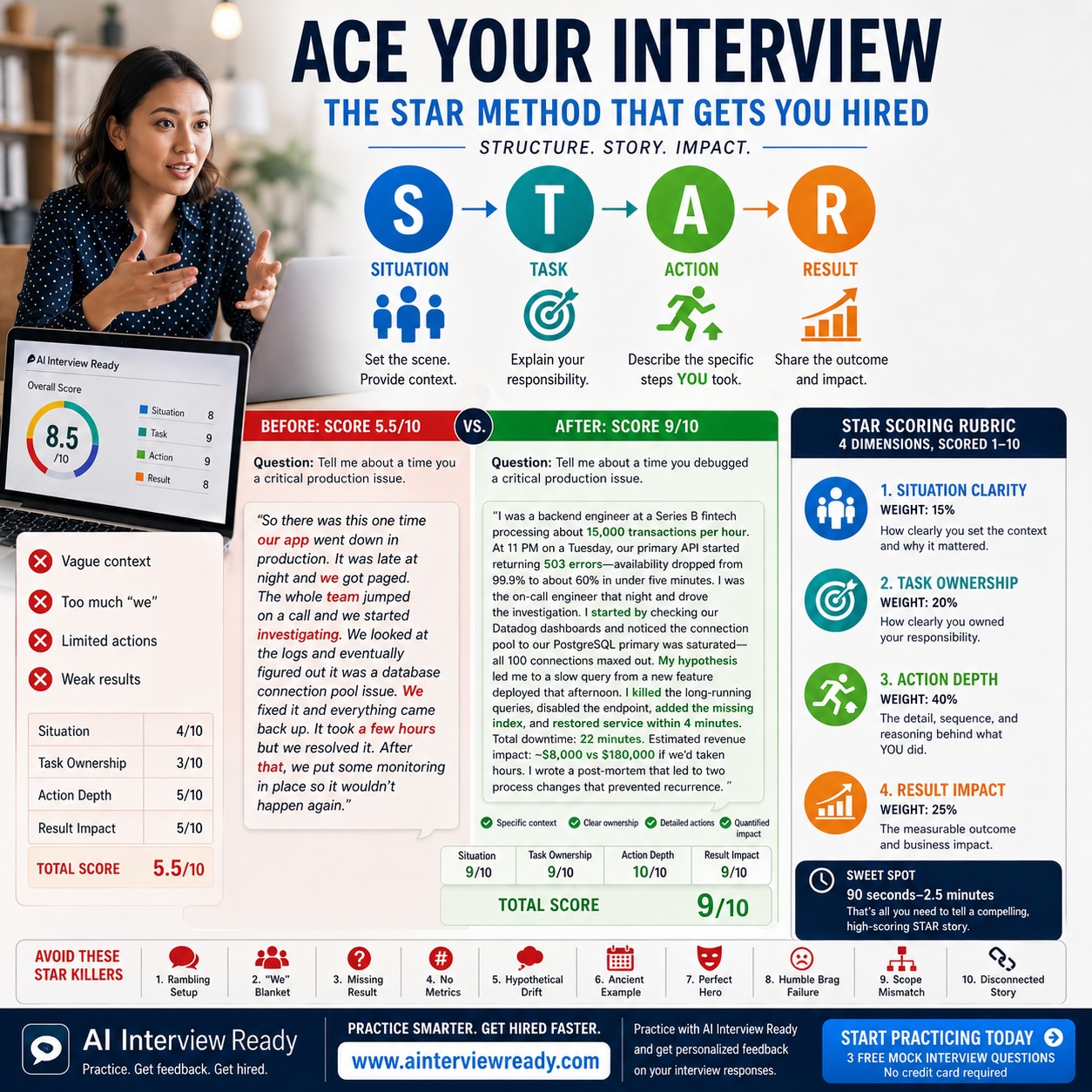
The Complete Guide to the STAR Method: Examples, Scoring, and a Practice System That Actually Works
Real STAR method examples scored against a 4-dimension rubric, plus the 10 mistakes that kill behavioral answers and a system to practice them right.
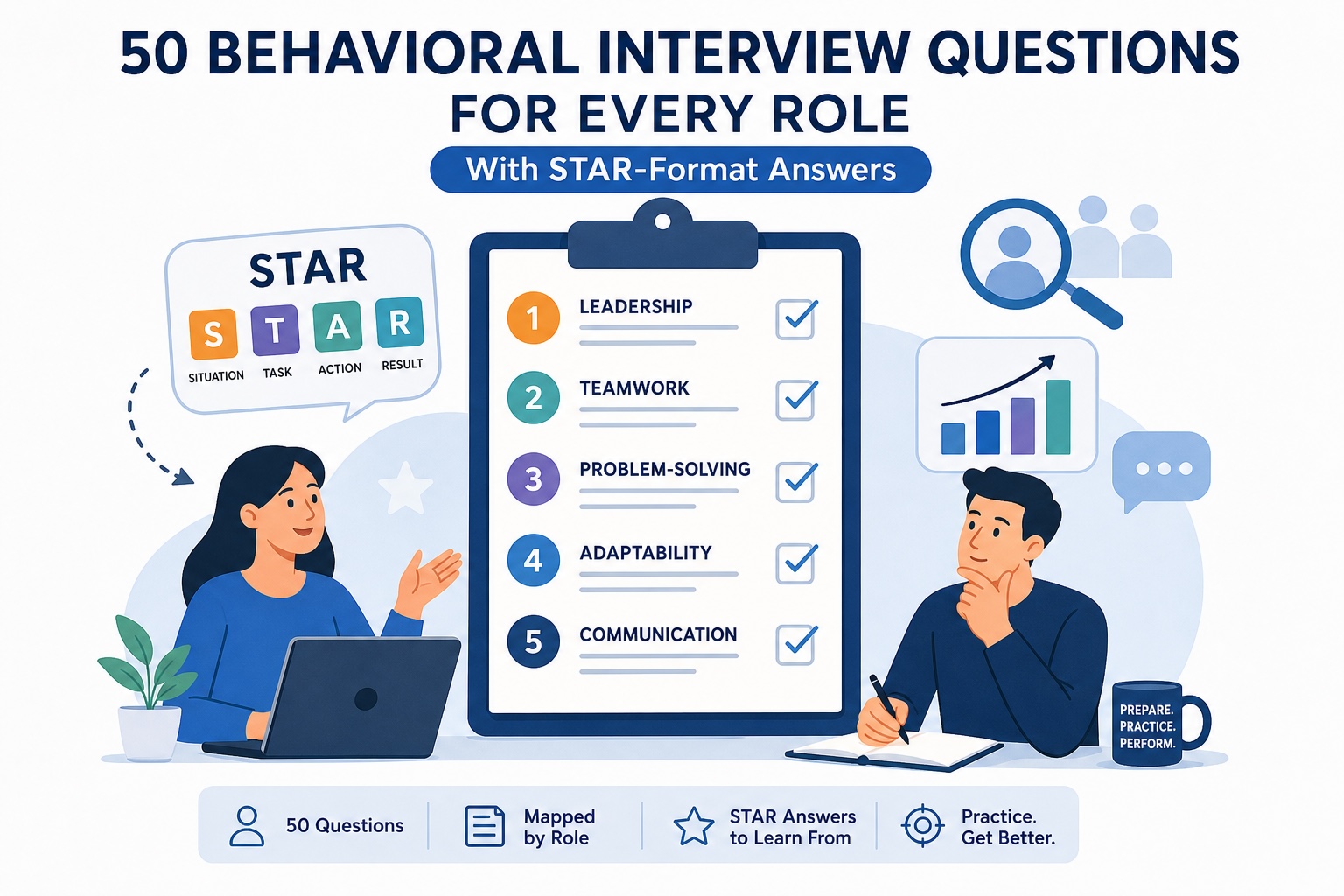
50 Behavioral Interview Questions (With STAR-Format Answers for Every Role)
50 behavioral interview questions organized by competency with STAR-format sample answers. Includes a role-mapping matrix for 14 roles so you know which questions to prepare for.

Why You Must Practice Interviews Out Loud: The Science of AI Speech Coaching
Passive reading fails as interview prep—verbal practice succeeds. 74% of candidates report mock interviews are most helpful. Learn why speaking answers aloud with AI speech coaching is the critical factor in converting preparation into job offers.