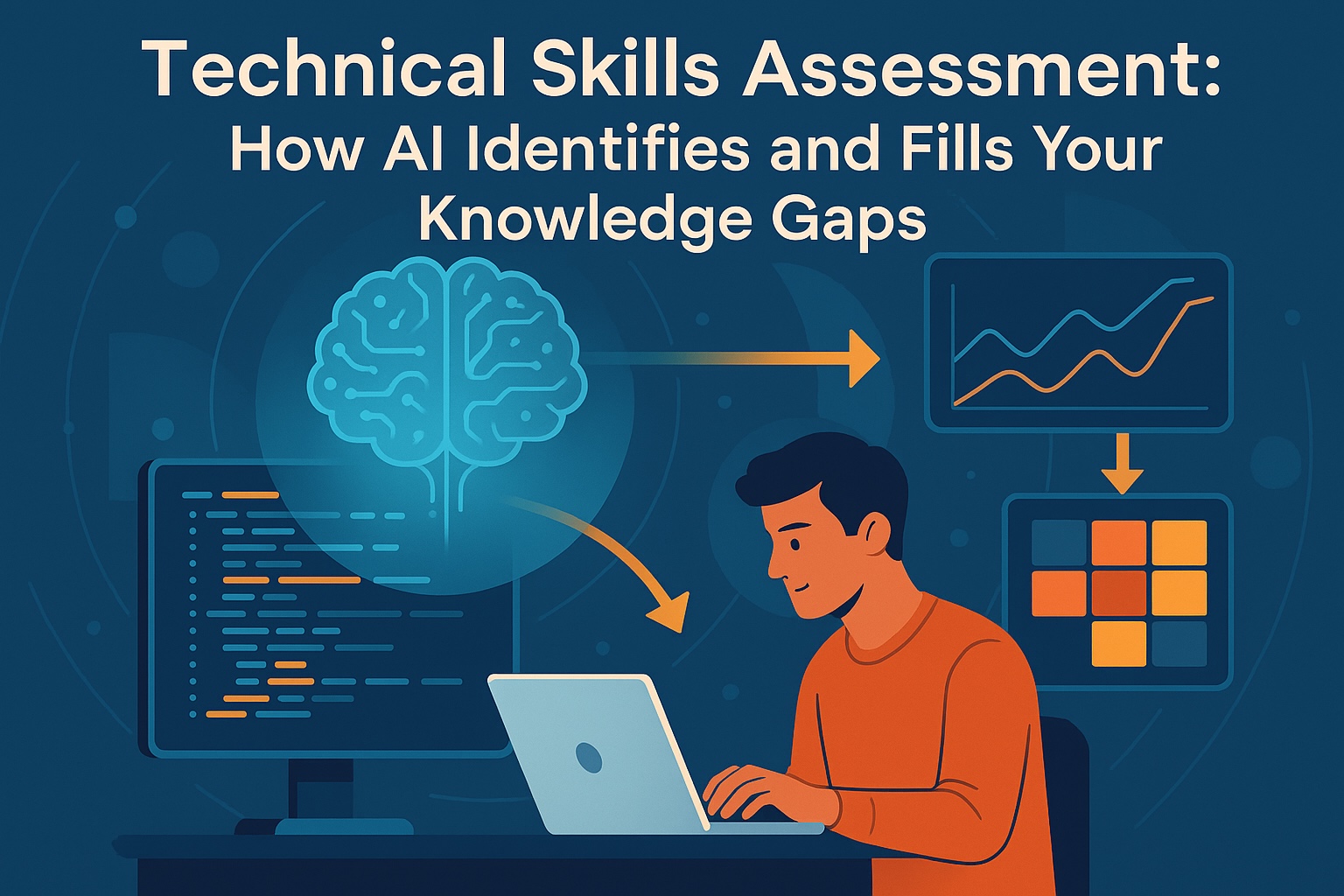
Technical Skills Assessment: How AI Identifies and Fills Your Knowledge Gaps
David Kim
Introduction
Technical interviews have evolved far beyond simple coding challenges. Today's technical assessments evaluate system design thinking, problem-solving methodologies, code quality, and architectural understanding. The challenge for candidates is identifying exactly where their knowledge gaps lie and how to address them efficiently before the interview.
Artificial intelligence has revolutionized technical skills assessment, providing unprecedented insights into your strengths, weaknesses, and optimal learning paths. This comprehensive guide explores how AI-powered assessment tools can transform your technical interview preparation from guesswork into a data-driven, highly effective process.
The Evolution of Technical Interviews
Understanding the modern technical interview landscape is crucial for effective preparation:
Multi-Dimensional Assessment: Today's technical interviews evaluate algorithmic thinking, system design capabilities, code quality, communication skills, and problem-solving approach. Success requires proficiency across all dimensions, not just coding ability.
Real-World Problem Focus: Companies increasingly use practical problems that mirror actual work challenges rather than abstract algorithmic puzzles. This shift requires broader technical knowledge and practical application skills.
Collaborative Evaluation: Technical interviews now emphasize collaboration, code review skills, and the ability to explain complex concepts clearly. Technical competence must be paired with strong communication abilities.
AI-Powered Skills Assessment: The Technology Behind the Analysis
Modern AI assessment tools use sophisticated algorithms to evaluate technical competency:
Code Quality Analysis: AI systems analyze your code for readability, efficiency, maintainability, and adherence to best practices. They identify patterns in your coding style that may indicate knowledge gaps or areas for improvement.
Problem-Solving Pattern Recognition: Advanced algorithms track your approach to different problem types, identifying whether you consistently struggle with specific concepts like dynamic programming, graph algorithms, or system scalability.
Knowledge Graph Mapping: AI creates comprehensive maps of your technical knowledge, showing connections between concepts and identifying foundational gaps that may be limiting your progress in advanced topics.
Comprehensive Technical Assessment Framework
Algorithmic Proficiency Evaluation
AI assessment tools evaluate your algorithmic skills across multiple dimensions:
Problem Recognition: How quickly and accurately you identify the appropriate algorithmic approach for different problem types. AI tracks your pattern recognition speed and accuracy across various categories.
Implementation Efficiency: Your ability to translate algorithmic concepts into clean, efficient code. AI analyzes code complexity, optimization opportunities, and implementation elegance.
Edge Case Handling: How comprehensively you consider and handle edge cases. AI evaluates your testing approach and defensive programming practices.
System Design Competency Assessment
System design skills are increasingly critical for senior technical roles:
Scalability Thinking: AI evaluates your ability to design systems that handle growth in users, data, and complexity. It assesses your understanding of horizontal vs. vertical scaling, load balancing, and distributed system principles.
Trade-off Analysis: Your capability to identify and articulate trade-offs between different architectural decisions. AI tracks how well you balance factors like consistency, availability, partition tolerance, and performance.
Technology Selection: How appropriately you choose technologies and tools for specific use cases. AI evaluates your knowledge of different databases, caching strategies, messaging systems, and architectural patterns.
Personalized Learning Path Generation
Once AI identifies your knowledge gaps, it creates customized learning strategies:
Prerequisite Mapping: AI identifies foundational concepts you need to master before tackling advanced topics. This prevents the frustration of studying advanced algorithms without solid fundamentals.
Optimal Learning Sequence: Based on your current knowledge and target role requirements, AI determines the most efficient order for learning new concepts, maximizing knowledge retention and application ability.
Adaptive Difficulty Progression: As you improve, AI adjusts the complexity of practice problems and concepts, ensuring you're always challenged at the appropriate level for optimal learning.
Deep Dive: Common Technical Knowledge Gaps
Data Structures and Algorithms
Frequent Gap Areas: Many candidates struggle with advanced tree operations, graph algorithms, and dynamic programming optimization. AI identifies these patterns and provides targeted practice.
Assessment Approach: AI evaluates not just your ability to solve problems, but your understanding of when and why to use specific data structures. It tests your knowledge of time and space complexity implications.
Improvement Strategy: Personalized problem sets that gradually build complexity, with AI providing hints and explanations tailored to your learning style and current understanding level.
System Architecture and Design
Common Weaknesses: Candidates often lack experience with distributed systems, microservices architecture, and scalability patterns. AI assessment reveals these gaps through scenario-based evaluations.
Evaluation Methods: AI presents real-world system design challenges and evaluates your approach, technology choices, and ability to handle scale and reliability requirements.
Learning Acceleration: Interactive system design simulations where you can experiment with different architectural decisions and see their implications in real-time.
AI-Enhanced Practice Methodologies
Intelligent Problem Selection
AI optimizes your practice time by selecting problems that target your specific weaknesses:
Gap-Focused Practice: Instead of random problem selection, AI chooses challenges that address your identified knowledge gaps while reinforcing your strengths.
Progressive Difficulty: Problems are sequenced to build understanding gradually, with each challenge slightly more complex than your current comfort level.
Concept Reinforcement: AI ensures you encounter the same concepts in different contexts, strengthening your understanding and ability to recognize patterns.
Real-Time Feedback and Correction
Immediate, intelligent feedback accelerates learning:
Code Quality Insights: As you write code, AI provides real-time suggestions for improvement, helping you develop better coding habits and style.
Algorithmic Guidance: When you struggle with a problem, AI provides graduated hints that guide you toward the solution without giving it away completely.
Performance Analysis: Detailed analysis of your solution's time and space complexity, with suggestions for optimization and alternative approaches.
Industry-Specific Technical Preparation
Software Engineering Roles
AI tailors preparation based on specific engineering disciplines:
Frontend Development: Focus on JavaScript algorithms, DOM manipulation efficiency, state management patterns, and performance optimization techniques.
Backend Development: Emphasis on API design, database optimization, concurrency handling, and system reliability patterns.
Full-Stack Development: Balanced preparation covering both frontend and backend concepts, with additional focus on integration patterns and end-to-end system thinking.
Data Science and Machine Learning
Specialized assessment for data-focused roles:
Statistical Foundations: AI evaluates your understanding of statistical concepts, hypothesis testing, and experimental design principles.
Algorithm Implementation: Assessment of your ability to implement machine learning algorithms from scratch and understand their mathematical foundations.
Data Pipeline Design: Evaluation of your skills in designing scalable data processing systems and ETL pipelines.
Advanced AI Assessment Features
Collaborative Coding Evaluation
AI assesses your ability to work effectively in team coding scenarios:
Code Review Skills: AI evaluates your ability to identify issues in others' code and provide constructive feedback.
Pair Programming Simulation: Practice sessions where AI acts as a coding partner, assessing your communication and collaboration skills.
Technical Communication: Evaluation of your ability to explain complex technical concepts clearly and concisely.
Stress Testing and Performance Under Pressure
AI simulates high-pressure interview conditions:
Time-Constrained Challenges: Assessment of your performance when working under tight deadlines, mimicking real interview pressure.
Interruption Handling: Evaluation of how well you handle questions and interruptions while coding, a common interview scenario.
Adaptive Pressure: AI adjusts pressure levels based on your stress response, helping you build resilience gradually.
Measuring Technical Improvement
AI provides comprehensive metrics to track your progress:
Competency Scoring: Detailed scores across different technical areas, showing your improvement over time and identifying areas that need continued focus.
Interview Readiness Index: A comprehensive score that indicates your readiness for technical interviews at different company levels and role types.
Comparative Analysis: How your skills compare to successful candidates for similar roles, providing realistic expectations and motivation.
Integration with Real Interview Scenarios
AI preparation tools increasingly mirror actual interview experiences:
Company-Specific Preparation: AI analyzes the technical interview patterns of specific companies and tailors your preparation accordingly.
Role-Specific Focus: Preparation is customized based on the specific technical requirements of your target role and seniority level.
Interview Format Simulation: Practice with different interview formats, from whiteboard coding to take-home assignments to system design discussions.
Future of AI-Powered Technical Assessment
Emerging trends in AI assessment technology:
Natural Language Processing: AI increasingly evaluates your ability to explain technical concepts in plain language, a crucial skill for senior technical roles.
Predictive Analytics: Advanced AI models predict your likelihood of success in specific technical interviews based on your current skill profile and improvement trajectory.
Continuous Learning Integration: AI assessment tools integrate with your daily coding work, providing ongoing skill evaluation and improvement suggestions.
Conclusion
Technical skills assessment has evolved from subjective evaluation to data-driven, AI-powered analysis that provides unprecedented insights into your capabilities and growth opportunities. By leveraging these advanced tools, you can transform your technical interview preparation from a time-intensive, uncertain process into an efficient, targeted journey toward mastery.
The key to success lies not just in identifying your knowledge gaps, but in understanding how to fill them systematically and efficiently. AI-powered assessment tools provide the roadmap, but your commitment to continuous learning and practice determines the destination.
Embrace the power of AI-enhanced technical preparation and approach your next technical interview with confidence, knowing you've addressed your weaknesses and amplified your strengths through intelligent, data-driven preparation.
Tags:
Share this article:
Ready to ace your next interview?
Practice with AI Interview Ready and get personalized feedback on your interview responses.
Start Practicing TodayRelated Articles

Does AI Interview Prep Actually Work? Data-Backed Effectiveness Analysis
AI interview preparation works, with research showing candidates are 3.7× more likely to advance to final rounds and receive 24% higher salary offers. Data-driven analysis of effectiveness, ROI, and when it works best.
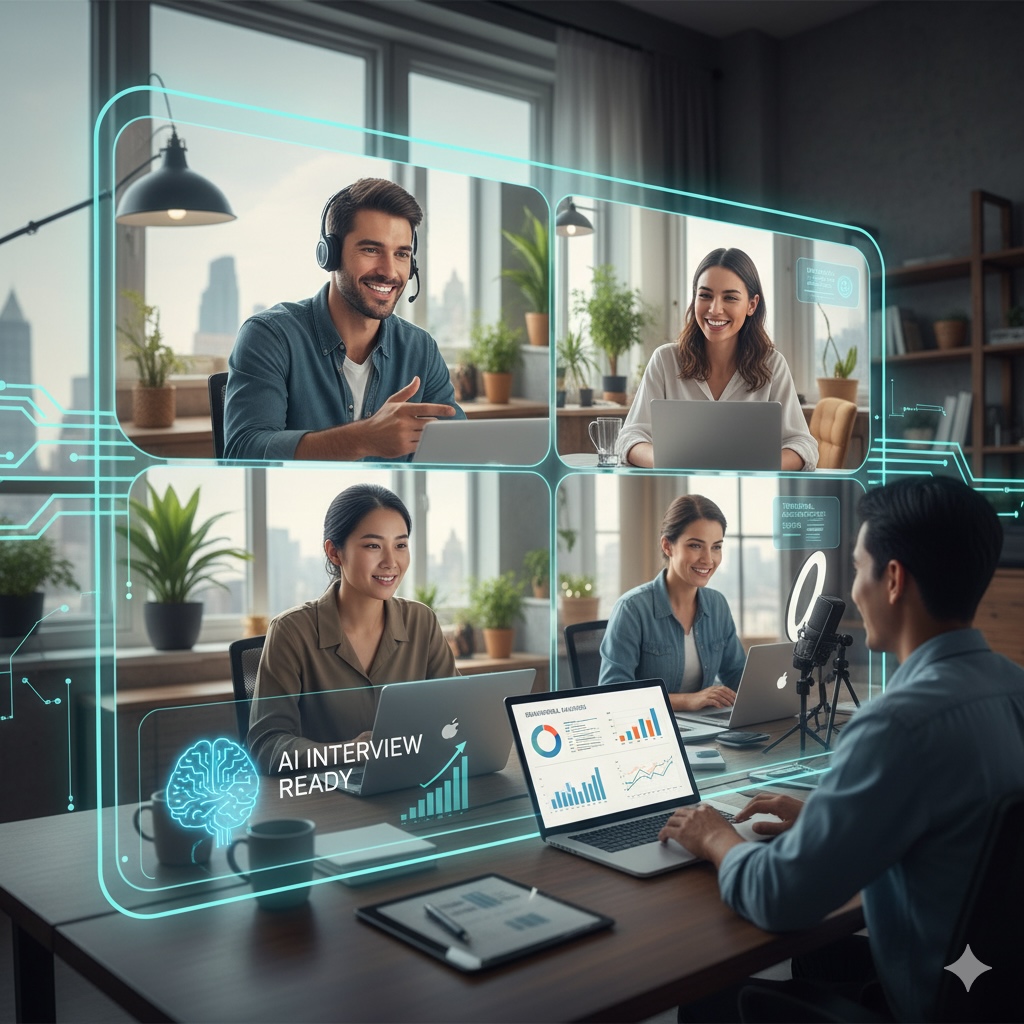
Remote Work Interview Mastery: AI-Powered Strategies for Virtual Success
Master virtual interviews with AI-powered strategies. Learn how to excel in remote work interviews and stand out in the digital hiring process.
Land Your Dream Job: Proven Interview Techniques and Strategies
Discover proven interview techniques and strategies to help you stand out from the competition and land your dream job.